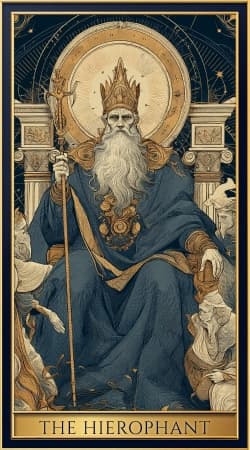
The Hierophant, also known as The Pope or The High Priest, is a card steeped in the imagery of established religious and spiritual authority. It typically depicts a robed figure, often seated on a throne and holding a papal tiara and a triple cross, signifying spiritual power and dogma. This figure is usually shown bestowing a blessing or teaching two acolytes kneeling before him. The imagery here speaks to tradition, established doctrine, and the passing down of knowledge through formal channels. It represents the bridge between the divine and the human, guided by established rituals, beliefs, and structures. The keys often shown in relation to this card symbolize access to hidden knowledge or spiritual truths, but in the context of The Hierophant, these keys unlock the gates of established institutions and their teachings rather than personal, intuitive wisdom.
When The Hierophant appears upright in a reading, it points toward conformity, adherence to tradition, and the value of established institutions and teachings. It suggests a need to learn from a mentor, follow established moral codes, or seek guidance within a structured system. This card can also signify important ceremonies, weddings, or formal educational pursuits. In its reversed position, the energy of The Hierophant shifts. Instead of seeking wisdom through established means, the card can indicate an unhealthy reliance on authority, rigid adherence to outdated rules, or a sense of hypocrisy. It may suggest that the structures and traditions being followed are no longer serving their purpose, or that the seeker is blindly emulating others without critical thought. This can also point to a rebellion against conformity or a feeling of being stifled by societal expectations.
This card invites contemplation on your relationship with tradition, authority, and established belief systems. It asks what doctrines you hold true, and why. Are you learning from respected sources, or merely conforming? The Hierophant encourages you to consider the role of institutions in your life, whether they be religious, educational, or social. It prompts you to examine where you seek guidance and whether those paths align with your authentic self. To sit with this card is to question the frameworks you operate within and to discern what traditions serve your growth versus those that hinder it. Consider a specific belief or practice you follow: what is its origin, and does it still hold value for you today?