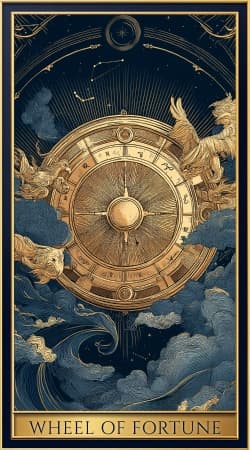
The Wheel of Fortune is one of the most dynamic cards in the Major Arcana, instantly recognizable by its central depiction of a large, often ornate wheel. This wheel is rarely still; it’s frequently shown in motion, sometimes with figures clinging to its sides, ascending, or falling. Around the wheel, you’ll often see four symbolic creatures—an eagle, an angel or human, a lion, and a bull—representing the four fixed zodiac signs (Aquarius, Taurus, Leo, and Scorpio) and their associated elements. These symbols, alongside the wheel itself, speak to the cyclical nature of existence, the celestial mechanics that govern our lives, and the grand, often unseen forces at play. The presence of the Hebrew letters of the Tetragrammaton, YHWH, or other divine names on the wheel further emphasizes its connection to fate, destiny, and the divine order, suggesting that what happens is not random but part of a larger, unfolding plan.
When the Wheel of Fortune appears upright, it signifies a pivotal moment of change, often one that feels fated or destined. It’s about embracing the inevitable turns of life’s journey, recognizing opportunities as they arise, and understanding that your timing is perfect. This card encourages you to trust the process, even when you don't understand it. When reversed, the energy shifts not to bad luck, but to a sense of being stuck or resisting the natural flow. It can manifest as delays, frustrating repetitions, or a feeling of powerlessness, as if the wheel is spinning out of your control. This is often because the querent is resisting necessary change or clinging too tightly to a past that no longer serves them. The reversal highlights a need to acknowledge the blockages, internal or external, that are preventing forward movement.
The Wheel of Fortune asks you to contemplate the nature of control in your life. Are you actively participating in the unfolding of your destiny, or are you a passive observer being tossed about by external events? This card invites a deep reflection on your relationship with change and uncertainty. It challenges you to find grace and acceptance amidst flux, understanding that every ascent is eventually followed by a descent, and vice versa. Instead of fearing the spin, ask yourself: What part of this cycle can I influence? Where can I find my footing, even as the ground shifts beneath me? The wisdom here lies in recognizing that while you may not control the wheel’s rotation, you can influence how you respond to its movement.