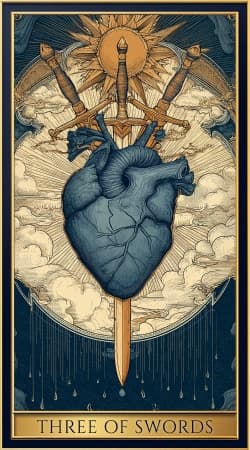
The Three of Swords presents a stark, often unsettling image: a heart pierced by three daggers, set against a backdrop of stormy, gray skies and a distant town, suggesting a world continuing oblivious to personal anguish. This visual is potent, leaving little room for ambiguity. The sharp edges of the swords, the bloodied heart – these are direct metaphors for profound emotional wounding. It’s the archetypal depiction of deep sorrow, the kind that severs connections and leaves one feeling exposed and vulnerable. The image doesn't shy away from the visceral nature of pain, portraying it as a sharp, piercing force that can feel inescapable. It speaks to a moment of undeniable truth, however harsh, that leaves an indelible mark. This isn't mere disappointment; it's the kind of pain that can redefine one's perspective, marking a significant turning point often accompanied by a sense of deep loss or betrayal.
When the Three of Swords appears upright, it signals a period of significant emotional distress, often stemming from difficult truths, broken promises, or profound loss. It’s a card of heartbreak, but also of painful realization – the moment when illusions shatter, and reality, however difficult, becomes clear. When reversed, this card doesn't necessarily signify a complete absence of pain, but rather a shift in how it's processed. It can indicate the beginning of healing, a conscious effort to move past conflict, or a profound acceptance of a painful situation. The energy of the swords, rather than being an external assault, might be turned inward, leading to self-criticism, or it might be harnessed to cut ties that are no longer serving. It suggests a transition from acute suffering towards resolution, though the path may still be challenging, requiring forgiveness and acceptance.
This card invites a deep examination of vulnerability and resilience. It asks you to confront the realities of emotional pain: Where does your deepest hurt lie? What truths have you been avoiding? The Three of Swords encourages you to acknowledge the wounds without allowing them to permanently define you. It’s a call to recognize that even the sharpest pain can eventually become a catalyst for growth, leading to a more authentic self. Consider how you can begin to process the heartache. Is there a truth you need to accept, or a boundary you need to set to protect your heart moving forward? The first step toward healing is often acknowledging the wound itself.